Every Kingwood homeowner who lived through Hurricane Ike in 2008 or Hurricane Beryl in July 2024 remembers the same scene: pines down across Kingwood Drive, power out for days, and blue tarps on roofs from Bear Branch to Kings Forest. Good hurricane roof preparation Kingwood TX homes can rely on is less about last-minute heroics and more about fixing small problems before a storm turns them into big ones. A loose shingle tab, a cracked pipe boot or a dead limb over the bedroom is easy to deal with in May. It is a different story at 2 a.m. with 70 mph gusts.
Here is a practical checklist built around the way storms actually damage roofs in Kingwood.
How hurricanes damage Kingwood roofs
Kingwood sits northeast of downtown Houston and well inland from Galveston, so by the time a hurricane reaches us it has usually weakened. That does not make it harmless. The damage we see after tropical storms tends to fall into four groups:
- Wind uplift. Gusts get under shingle edges, break the seal strips and peel shingles off, starting at the eaves, rakes and ridge.
- Falling trees and limbs. In a town this wooded, this is often the biggest source of serious roof damage. Saturated soil plus sustained wind is hard on tall pines.
- Wind-driven rain. Rain moving sideways finds gaps at flashing, vents and worn pipe boots that never leak in a normal storm.
- Flying debris. Patio furniture, trash cans and limbs from neighboring yards can puncture shingles or break skylights.
Hurricane Harvey in 2017 and Tropical Storm Imelda in 2019 are remembered in Kingwood mostly for flooding, which is a separate problem from roof damage and is handled differently by insurance. This checklist is about the part of the house a roofer can actually help with: what is over your head.
Hurricane roof preparation in Kingwood, TX starts with the trees
If you only do one thing for hurricane roof preparation in Kingwood, TX, deal with the trees. Look up at your roof from every side of the house and ask what could fall on it.
- Trim back limbs that touch or hang over the roof.
- Remove dead branches anywhere in the canopy above the house.
- Have a certified arborist evaluate large pines or oaks within falling distance, especially any that lean toward the house, have dead tops or show fungus or cracks near the base.
- Ask neighbors about trees on their side of the fence that overhang your roof.
Book tree work early. In late summer, and especially once a storm is in the Gulf, arborists across north Harris County fill up fast. Our post on pine trees and your roof covers the everyday side of living under a heavy canopy.
Check the roof covering and edges
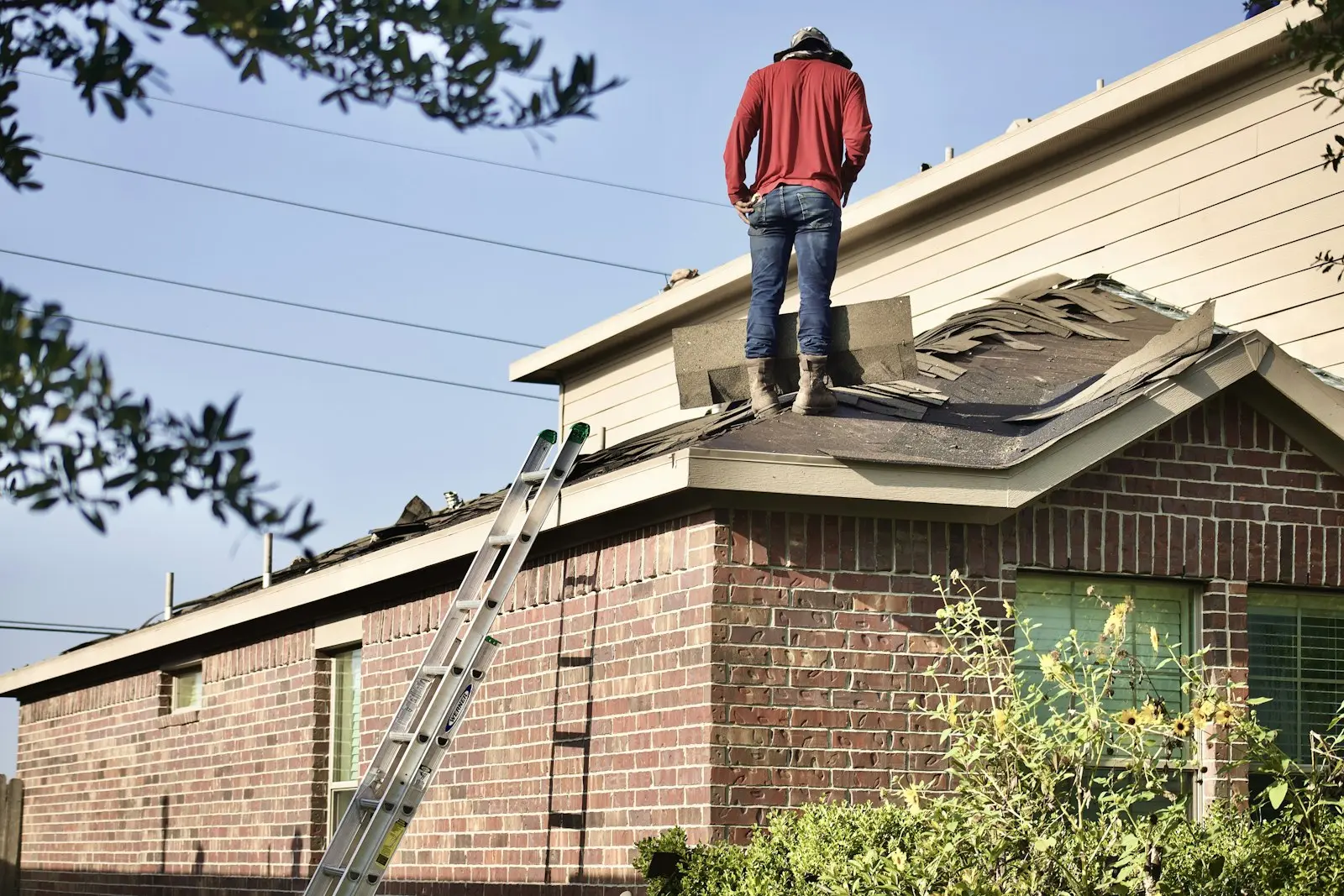
You do not need to climb up to spot most warning signs. From the ground with binoculars, or from an upstairs window, look for:
- Shingles that are lifted, curled, cracked or missing
- Bare patches where granules have worn away
- Loose or bent drip edge along the eaves and rakes
- Ridge cap shingles that look cracked or out of line
- Exposed nail heads or shingles that have slid
Pay special attention to the edges. Wind uplift almost always starts at the perimeter, so a few loose shingles at the eaves can become a bare section of roof in a strong gust. On many 1980s and 1990s Kingwood homes, the shingles are on their second or third life and the seal strips have weakened with age. If your roof is older, our roof age estimator is a quick way to gauge how much life it has left.
Flashing, vents and pipe boots
Wind-driven rain is the main reason homes leak during a hurricane even when no shingles come off. Water gets pushed sideways and up into joints that handle normal rain just fine. The weak spots are predictable:
| Component | What to look for | Why it matters in a storm |
|---|---|---|
| Pipe boots | Cracked or split rubber collars around plumbing vents | A common entry point for sideways rain |
| Chimney and wall flashing | Gaps, rust, dried sealant, loose counterflashing | Wind pushes water behind loose metal |
| Roof vents | Dents, cracks, chewed plastic, loose fasteners | Vents can blow off and leave an open hole |
| Ridge vent | Lifting sections, missing end caps | Driving rain can enter along the ridge |
| Skylights | Cracked lens, failing seals, stained drywall nearby | Exposed to impact and sideways rain |
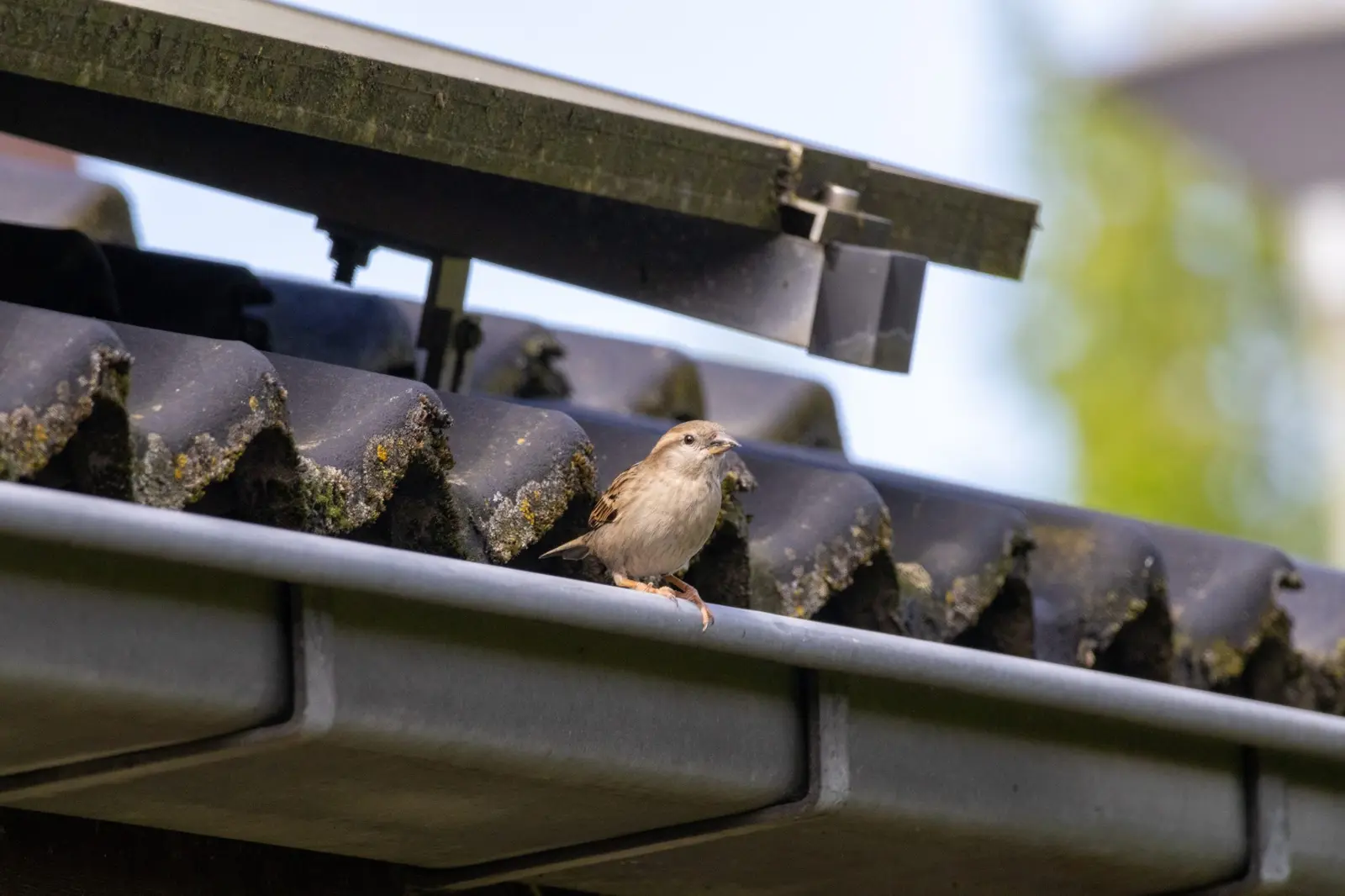
Squirrels are a Kingwood wildcard here. Chewed plastic vents and pipe boots are common under heavy tree cover, and a damaged vent that holds up fine in a normal summer storm may not in a tropical one.
Free roof inspection in Kingwood
Photo report, straight answers, no obligation. Most inspections are on the calendar within a few days.
Gutters and drainage
Hurricanes can drop several inches of rain in a short time. If your gutters are packed with pine needles, that water spills over the edge, soaks the fascia and can back up under the first course of shingles. Before the season:
- Clean gutters and downspouts completely and flush them with a hose.
- Check that gutters are firmly attached. Loose sections can be ripped off in high wind and damage the roof edge on the way.
- Make sure downspouts discharge away from the foundation.
If cleaning gutters is a monthly chore at your house, gutter guards rated for pine needles may be worth it. See our gutter services for options.
Document your roof before the storm
This step is easy to skip and very useful later. On a clear day, take date-stamped photos of every side of your roof from the ground, plus the attic, ceilings and any existing stains. Save them somewhere off your phone. If you ever need to file a claim, photos of the roof's condition before the storm can help show what was new damage.
While you are at it, pull out your homeowners policy and find the wind or hurricane deductible. Many Texas policies set it as a percentage of dwelling coverage, so on a typical Kingwood home it can be a significant amount. Knowing that number ahead of time helps you make calm decisions afterward. Our free roof inspection includes photo documentation you can keep on file.
When a storm is in the forecast
Once a named storm is headed toward the upper Texas coast, the roof work window has mostly closed. Focus on what you can control:
- Bring in or tie down patio furniture, grills, trampolines and trash cans.
- Clear any last debris from gutters if it is safe to do from a ladder on the ground.
- Move valuables away from ceilings with past leaks.
- Keep a tarp, buckets and towels handy for interior leaks.
- Save our number, (512) 297-7580, so you are not searching for a roofer in Kingwood after the cell towers get overloaded.
After the storm passes
Walk the property once it is safe. Watch for downed power lines, which are common after storms here. Photograph damage from the ground, cover interior leaks, and call for an emergency tarp if there is an opening. Expect door-knockers within days. Any contractor who offers to cover or waive your deductible is proposing something illegal in Texas.
Our storm damage checklist walks through the steps in order. Good hurricane roof preparation Kingwood TX homeowners do in the off-season makes this part much shorter. If you want a professional set of eyes on your roof before the next storm, call us to set up a free inspection.